Many makers believe that achieving permanent marks on metal requires expensive chemical coatings. I am here to show you that you can achieve professional results by simply optimizing your machine settings. Learning how to engrave stainless steel with a diode laser without spray allows you to save money while streamlining your workflow.
In this guide, I will walk you through the precise adjustments needed for your equipment. By fine-tuning your power and speed, you can create high-contrast designs directly on the surface. This method eliminates the mess of extra materials and provides a clean, durable finish every time.
Mastering these techniques will transform your projects. You will no longer need to rely on costly supplies to get the job done right.
Key Takeaways
- Achieve permanent metal marking using only optimized machine parameters.
- Eliminate the need for expensive chemical coatings or marking compounds.
- Improve your workflow efficiency by removing unnecessary preparation steps.
- Create high-contrast, professional-grade designs on various metal surfaces.
- Understand the relationship between power, speed, and focal length for better results.
Understanding the Physics of Laser Marking Stainless Steel
To achieve professional results, I believe that understanding the physics behind the process is the secret to successful diode laser engraving stainless steel. When I work with metal, I am not simply burning the surface; I am manipulating the material at a molecular level. This process relies on the precise application of concentrated light energy to create a lasting visual change.
The Role of Heat and Oxidation in Metal Marking
Stainless steel contains a high percentage of chromium, which naturally forms a protective layer of chromium oxide. When I focus my laser beam onto the surface, the intense heat triggers a localized oxidation reaction. This reaction alters the refractive index of the metal surface, resulting in a dark, permanent mark.
Unlike traditional engraving, this method does not remove material. Instead, it changes the chemical composition of the top layer. I find that managing the thermal input is critical to ensure the mark is consistent and durable. Key factors in this process include:
- Thermal Conductivity: How quickly the metal dissipates the heat.
- Oxidation Rate: The speed at which the chromium reacts to the heat.
- Surface Finish: The initial texture of the steel, which affects light absorption.
Why Diode Lasers Can Achieve Permanent Marks
Many people assume that laser marking stainless steel requires high-powered industrial machines, but diode lasers are surprisingly effective. Because these lasers operate at specific wavelengths, they can be tuned to interact perfectly with the metal surface. This allows for stainless steel laser engraving that is both crisp and resistant to wear.
The permanence of the mark comes from the fact that the oxide layer is bonded to the base metal. Since I am not creating a deep groove, the structural integrity of the stainless steel remains intact. This makes the technique ideal for applications where surface smoothness is essential. By mastering these thermal dynamics, I can achieve high-quality results without the need for chemical sprays or additives.
Essential Equipment and Material Preparation
Mastering the art of metal marking starts long before you turn on your laser. Achieving consistent stainless steel laser engraving requires a disciplined approach to both your hardware and the materials you choose to process.
Selecting the Right Stainless Steel Grade
Not all metals react the same way to thermal energy. I find that 304 and 316 stainless steel grades are the most reliable choices for beginners and professionals alike.
These alloys contain specific chromium and nickel levels that respond well to diode lasers. Understanding these stainless steel marking techniques will help you avoid inconsistent results or poor contrast during your projects.
Surface Cleaning and Preparation Techniques
The surface of your metal must be pristine to ensure the laser interacts correctly with the material. Any residual oils, fingerprints, or industrial lubricants can act as a barrier, leading to uneven marks.
I recommend using high-purity isopropyl alcohol and a lint-free cloth to wipe the surface thoroughly. This simple step is vital for engraving on metal without spray, as it allows the laser to bond directly with the clean metal surface.
Optimizing Your Workspace for Safety and Precision
Your workspace environment plays a significant role in the quality of your output. A stable, vibration-free surface is essential for maintaining a precise focal point throughout the entire marking process.
Safety should always remain your top priority when engraving stainless steel without chemicals. Ensure your area has proper ventilation to manage any fumes and always wear appropriate laser safety glasses to protect your eyes from stray reflections.
Finally, verify that your laser module is securely mounted and calibrated. Precision is the key to achieving professional-grade marks that are both permanent and aesthetically pleasing.
How to engrave stainless steel with a diode laser without spray
Learning how to engrave stainless steel with a diode laser without spray is a game-changer for your workshop projects. By moving away from messy chemical coatings, you gain a cleaner workflow and more consistent results. I have found that success relies entirely on your ability to control the thermal reaction on the metal surface.
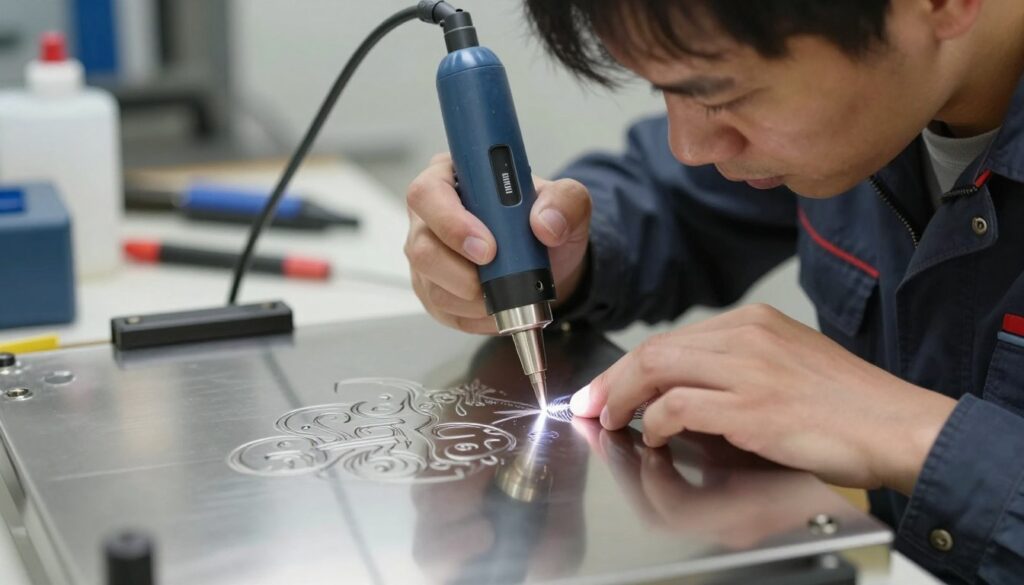
Calibrating Your Laser Focus for Metal
The most critical step in diode laser engraving stainless steel is achieving a razor-thin focal point. Because metal is highly reflective, even a slight deviation in focus will cause the beam to scatter rather than penetrate the surface. I always use a digital gauge to ensure my focal distance is accurate to the millimeter.
A tight, concentrated beam ensures that the energy density remains high enough to create a permanent mark. If your focus is off, you will likely see light surface scratches instead of a deep, dark oxidation. Always double-check your Z-axis height before starting any project.
Determining Optimal Power and Speed Settings
Finding the right balance between power and speed is the core of effective stainless steel marking techniques. High power combined with slow speed often leads to unwanted heat distortion, while too much speed results in a faint, invisible mark. You must find the “sweet spot” where the laser creates a dark, crisp contrast without warping the material.
I recommend starting with a conservative power setting and adjusting your speed incrementally. This methodical approach prevents you from burning through your material or damaging your laser diode. Patience during this phase is one of the most important laser engraving stainless steel tips I can offer.
Executing the Marking Process Step-by-Step
Setting Up Your Software Parameters
In your laser software, set your fill mode to “line” or “hatch” to ensure full coverage. I prefer a cross-hatch pattern for a more uniform, professional finish on stainless steel. Ensure your line interval is set tight, typically between 0.05mm and 0.08mm, to create a solid, high-contrast mark.
Running Test Grids for Perfect Contrast
Before committing to a final design, I always run a test grid on a scrap piece of the same material. This allows me to see exactly how different combinations of speed and power interact with the metal. Use the table below as a starting point for your own calibration tests.
| Power (%) | Speed (mm/min) | Result Quality |
|---|---|---|
| 80% | 500 | Deep, dark mark |
| 80% | 800 | Clear, medium contrast |
| 60% | 500 | Light, subtle mark |
| 60% | 800 | Faint, inconsistent |
Finalizing the Engraving Sequence
Once you have identified the best settings from your test grid, input them into your final project file. I suggest running a single pass first to verify the alignment. If the mark looks solid and permanent, you can proceed with confidence, knowing your machine is perfectly calibrated for the task.
Troubleshooting Common Marking Issues
I have found that mastering the art of engraving on metal without spray involves learning how to troubleshoot effectively. Even when your settings seem perfect, you may occasionally encounter unexpected results that require a quick adjustment. By understanding these common pitfalls, you can maintain a high standard of quality in every project.
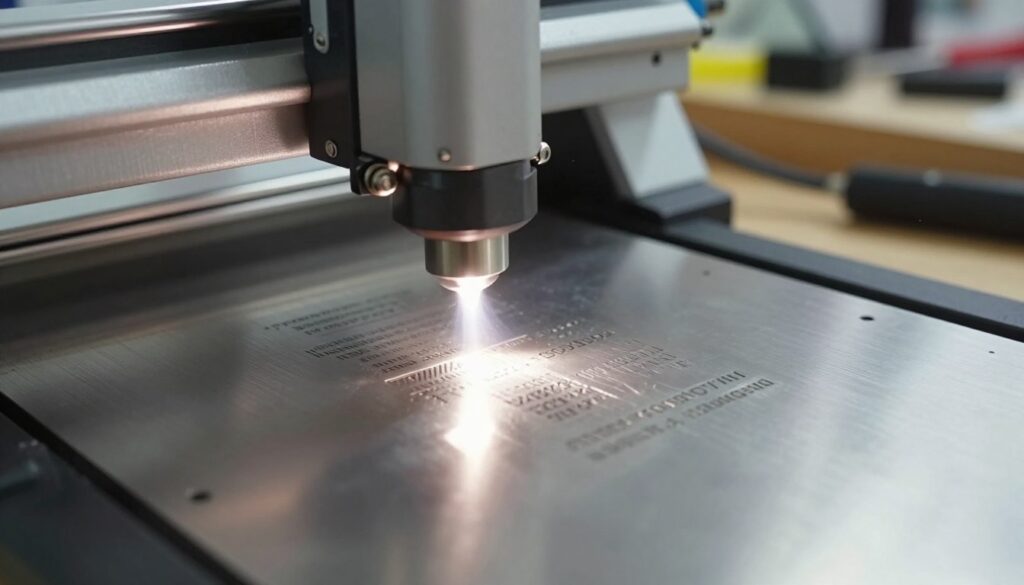
Addressing Faint or Inconsistent Marks
If your marks appear faint or patchy, the issue often lies in the focal distance or power delivery. I recommend double-checking your focus, as even a millimeter of deviation can significantly reduce the energy density on the metal surface. Consistency is key when you are performing laser marking stainless steel, so ensure your material is perfectly level.
Sometimes, the speed is simply too high for the power output of your diode module. Try slowing down your movement speed to allow the laser more time to interact with the material. These laser engraving stainless steel tips will help you achieve a deeper, more permanent contrast without needing extra chemicals.
Preventing Surface Scratches and Heat Distortion
Heat distortion often occurs when the laser dwells too long on a single spot, causing the metal to warp or discolor. To prevent this, I suggest using a metal jig or heavy magnets to keep the workpiece flat and dissipate heat efficiently. You should also consider using an air assist system to blow away debris and cool the surface during the process.
Surface scratches are another common headache, often caused by improper clamping or debris under the material. Always clean your workspace thoroughly before starting. Using a soft backing material can also protect the underside of your stainless steel from unwanted marks.
Managing Reflectivity Challenges
Polished stainless steel is highly reflective, which can sometimes cause the laser beam to bounce back into the lens. This reflection can damage your diode module over time if not managed correctly. I find that slightly tilting the material or using a matte finish can help diffuse the light and improve absorption.
| Issue | Primary Cause | Recommended Solution |
|---|---|---|
| Faint Marks | Incorrect Focus | Recalibrate Z-axis height |
| Heat Distortion | Excessive Dwell Time | Increase speed or reduce power |
| Reflective Glare | High Surface Polish | Tilt material or use matte coating |
| Inconsistent Lines | Unstable Workpiece | Secure with clamps or magnets |
Conclusion
Achieving professional results on metal surfaces relies on your grasp of thermal physics and laser calibration. I find that consistent practice turns complex technical challenges into simple, repeatable workflows.
You now possess the knowledge to produce high-quality designs while engraving stainless steel without chemicals. This clean approach protects your health and keeps your workspace free from messy residues.
I encourage you to test different power levels and speeds on scrap pieces of 304 or 316 stainless steel. Small adjustments to your focus settings often reveal new levels of detail and contrast in your work.
Your creative potential grows as you refine these skills. Experimenting with various diode laser brands like xTool or Ortur allows you to push the boundaries of what is possible with metal marking. Keep documenting your settings to build a personal library of successful project parameters.
The ability to perform engraving stainless steel without chemicals opens doors to custom jewelry, industrial labeling, and personalized gifts. I look forward to seeing the unique projects you create using these precise techniques.