Operating high-powered crafting tools within limited living quarters presents unique ventilation hurdles. I quickly discovered that managing fumes is vital to maintaining healthy indoor air quality while pursuing my creative projects.
Finding the apartment-friendly smoke purifier that fits my specific setup became my top priority. Without proper filtration, the byproduct of cutting materials can easily overwhelm small rooms.
My journey involved testing various systems to balance heavy-duty performance with compact design constraints. This guide offers a clear roadmap to help you navigate these technical challenges effectively.
Key Takeaways
- Prioritize high-efficiency particulate air (HEPA) and activated carbon filtration.
- Ensure the unit matches the cubic feet per minute (CFM) requirements of your machine.
- Consider noise levels to maintain peace with neighbors in shared buildings.
- Compact footprints are essential for maximizing limited floor space.
- Regular maintenance of filters is critical for consistent air safety.
Understanding the Importance of Air Filtration in Small Spaces
Managing smoke and fumes is the most critical challenge for anyone operating a laser cutter in a confined residential space. When you work in an apartment, the lack of natural cross-ventilation makes the air quality deteriorate rapidly. Effective filtration is not just a luxury; it is a necessity for your well-being.
Why Standard Ventilation Fails in Apartments
Most apartment buildings rely on centralized HVAC systems that recirculate air between units. These systems are designed to filter dust and pollen, not the concentrated chemical vapors produced by burning materials like acrylic or wood. Relying on a simple window fan often pushes smoke into your neighbor’s living space rather than clearing it from your own.
Standard ventilation lacks the high-static pressure required to pull smoke through a dedicated hose. Without a dedicated filtration system, you are essentially trapping toxic byproducts inside your home. This is why finding the best indoor air purifier for laser engravers is the first step toward a safe hobby.
Health Risks Associated with Laser Engraving Fumes
Laser engraving releases microscopic particulate matter and volatile organic compounds (VOCs) that can penetrate deep into your lungs. Prolonged exposure to these fumes can lead to respiratory irritation, headaches, and long-term health complications. You should never compromise on your respiratory health for the sake of a project.
“The accumulation of ultrafine particles in an unventilated room can reach levels that exceed industrial safety standards within minutes of operation.”
Using an efficient air purifier for apartment laser engraving helps capture these dangerous particles before they settle on your furniture or enter your bloodstream. The following table highlights why standard methods fall short compared to specialized filtration.
| Method | Particle Removal | VOC Control | Apartment Suitability |
|---|---|---|---|
| Window Fan | Low | None | Poor |
| Standard HVAC | Low | None | Poor |
| HEPA/Carbon Purifier | High | High | Excellent |
Legal and Neighborly Considerations for Indoor Laser Use
Living in a multi-unit building means your actions directly impact those around you. Venting smoke out of a window can trigger fire alarms or lead to noise and odor complaints from neighbors. Most lease agreements strictly prohibit the modification of building ventilation or the discharge of industrial-grade pollutants.
By utilizing a self-contained filtration unit, you keep your workspace compliant with building regulations. This approach allows you to maintain a professional and respectful environment while pursuing your creative goals. Investing in the right equipment ensures that your hobby remains a private, safe, and enjoyable experience.
Selecting the Best Smoke Purifier for Laser Engraver in a Home Apartment
Finding the best smoke purifier for laser engraver in a home apartment requires a deep understanding of how these machines interact with your indoor environment. I prioritize systems that offer robust filtration without occupying excessive floor space. A high-quality unit ensures that your creative projects do not compromise the air quality of your living area.
Key Features to Look for in a Filtration System
When shopping for a smoke filter for laser engraving machines, you must look beyond basic fan power. The internal architecture of the unit determines how effectively it captures hazardous particulates and volatile organic compounds.
HEPA and Activated Carbon Filter Requirements
A reliable home laser engraver air purification system must utilize a multi-stage filtration process. I always recommend a setup that combines a high-efficiency particulate air (HEPA) filter with a deep-bed activated carbon filter.
The HEPA layer is essential for trapping microscopic dust and smoke particles generated during the engraving process. Meanwhile, the activated carbon layer is crucial for neutralizing the chemical odors and toxic fumes that often linger after cutting materials like acrylic or wood.
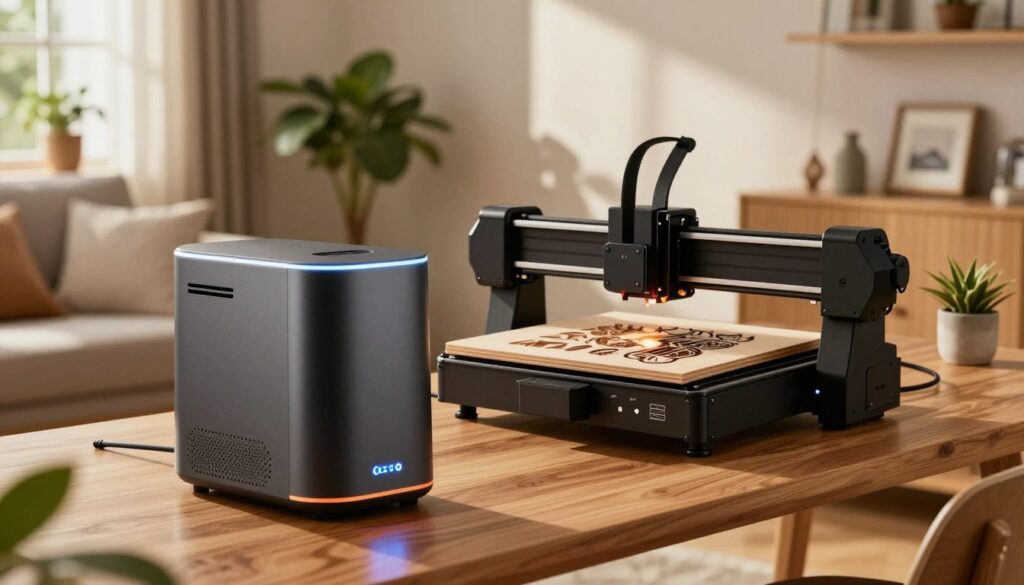
Airflow capacity, measured in cubic feet per minute (CFM), dictates how quickly the unit can cycle the air in your enclosure. However, high CFM is useless without sufficient static pressure to overcome the resistance of dense filter media.
You should look for a system that maintains consistent suction even as the filters begin to load with debris. A unit with an intelligent pressure sensor will alert you when it is time to replace your filters, ensuring your workspace remains safe.
Top Recommended Purifier Models for Residential Use
Selecting a top-rated air purifier for laser engraving often comes down to proven performance in compact settings. I have evaluated several industry-standard units that excel in residential environments where space is at a premium.
Evaluating the Bofa AD Oracle for Compact Setups
The Bofa AD Oracle is a powerhouse designed specifically for laser applications. Its compact footprint makes it an ideal candidate for apartment dwellers who need professional-grade extraction.
I find its automatic flow control feature particularly impressive, as it adjusts the motor speed to maintain constant airflow. This ensures that your laser cutter remains properly vented throughout the entire duration of your project.
Assessing the Purex 200i for Apartment Efficiency
The Purex 200i stands out as a highly efficient solution for those seeking a quiet yet powerful best indoor air purifier for laser engravers. It features a user-friendly interface that allows for precise control over extraction levels.
Its modular design allows for easy filter changes, which is a significant advantage for home users. By choosing a system like the Purex 200i, you gain peace of mind knowing that your air is being scrubbed of harmful contaminants effectively.
Preparing Your Workspace for Optimal Smoke Extraction
Transforming a small apartment corner into a professional-grade laser workshop starts with smart ventilation planning. While choosing an apartment-friendly smoke purifier is a vital first step, your physical setup determines how well that system actually performs. I have learned that even the most expensive equipment struggles if the surrounding environment is not properly prepared.
Sealing Your Laser Engraver Enclosure
To prevent smoke from leaking into your living space, you must ensure your laser enclosure is airtight. Fugitive emissions often escape through gaps in the lid or around cable entry points. I recommend using adhesive foam weather stripping to create a tight seal around the perimeter of your machine’s cover.
By sealing these gaps, you force the air to travel through your filtration system rather than leaking into the room. This simple modification significantly improves the effectiveness of any smoke extractor for home laser engraving. A well-sealed unit ensures that every bit of smoke is captured at the source.
Positioning the Intake Hose for Maximum Efficiency
The placement of your intake hose is critical for maintaining consistent airflow. You should position the hose as close to the laser head as possible without interfering with the gantry’s movement. This proximity allows the system to pull fumes away before they have a chance to disperse.
“Effective air management is not just about the power of your fan; it is about the precision of your capture point. If you fail to capture the smoke at the source, no filter can save your indoor air quality.”
Managing Ducting and Window Venting Constraints
Living in an apartment often means dealing with limited venting options. You must balance the need for direct exhaust with the aesthetic and structural limitations of your home. Using an efficient air purifier for apartment laser engraving requires a strategic approach to routing your ducting.
Using Window Seal Kits for Apartment Windows
Window seal kits are essential for apartment dwellers who need to vent outside without permanent modifications. These kits typically use a fabric barrier with a zippered opening to accommodate your exhaust hose. They are easy to install and remove, making them perfect for temporary setups.
Routing Hoses to Minimize Bends and Airflow Resistance
Every bend in your ducting creates resistance, which forces your fan to work harder and reduces overall suction. I always aim for the shortest, straightest path possible when routing hoses. If you must use a bend, ensure it is a gentle curve rather than a sharp, kinked angle.
| Ventilation Method | Efficiency Level | Apartment Suitability |
|---|---|---|
| Direct Window Venting | High | Moderate |
| Portable Filtration Unit | Very High | Excellent |
| Passive Air Purifier | Low | Poor |
By following these steps, you ensure that your apartment-friendly smoke purifier operates at its peak potential. Proper workspace preparation is the foundation of a safe, productive, and clean home laser engraving experience.
Step-by-Step Installation of Your Smoke Purifier
Setting up your new filtration unit is the final step toward a safer workspace. When you choose a top-rated air purifier for laser engraving, you invest in the longevity of your equipment and the quality of your indoor environment. I recommend taking your time during this phase to ensure every connection is secure and functional.
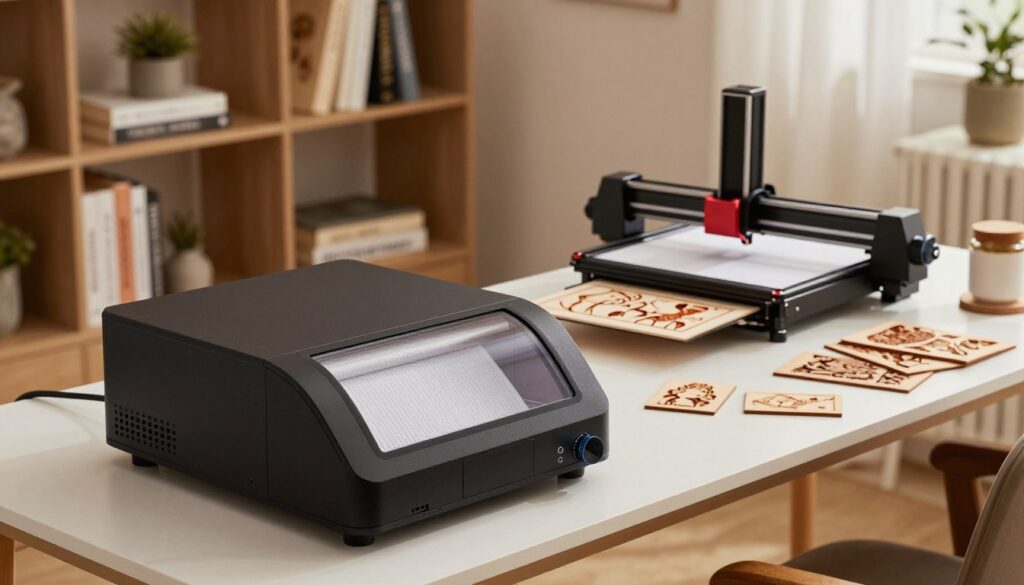
Connecting the Extraction Hose to the Laser Unit
The first task involves attaching the flexible extraction hose from your laser cutter to the intake port of your filtration unit. You must ensure the hose is pulled taut to prevent kinks that restrict airflow. Always use high-quality hose clamps to create an airtight seal at both the laser exhaust and the purifier inlet.
If your hose length is excessive, consider trimming it to the shortest possible distance. A shorter path significantly improves the suction power of your home laser engraver air purification system. Check that the hose material is rated for high temperatures to avoid melting or degradation during long engraving sessions.
Configuring the Purifier Settings for Your Specific Material
Different materials produce varying levels of smoke and particulate matter. Adjusting your fan speed is crucial for capturing these fumes effectively before they enter your room. You should experiment with the airflow settings to find the balance between noise levels and extraction efficiency.
Adjusting Fan Speed for Wood Engraving
Wood engraving typically produces a moderate amount of smoke and fine dust. I find that a medium fan speed is usually sufficient to maintain a clear workspace. If you notice lingering odors, increase the speed slightly to ensure the smoke extractor for home laser engraving captures all airborne particles.
Optimizing Filtration for Acrylic and Plastic Cutting
Cutting acrylic or plastic generates thick, pungent fumes that require higher extraction power. You should set your fan to the maximum speed to ensure rapid removal of these hazardous vapors. This high-speed setting prevents the buildup of sticky residue on your laser lens and internal components.
Testing the Seal and Airflow Integrity
Once everything is connected, you must verify that no leaks exist in your system. A simple way to test this is by placing a small piece of tissue near the hose joints while the fan is running. If the tissue is pulled firmly against the joint, your seal is likely secure.
You can also perform a visual smoke test by using a small incense stick near the enclosure seams. If the smoke is drawn into the laser cabinet rather than escaping into the room, your setup is successful. Regular checks will keep your air clean and your workspace safe.
| Material Type | Fan Speed Setting | Filter Load Expectation |
|---|---|---|
| Softwood | Medium | Moderate |
| Hardwood | Medium-High | High |
| Acrylic | Maximum | Very High |
| Cardboard | Low-Medium | Low |
Maintenance Routines to Keep Your Air Clean
I have found that a proactive maintenance schedule is essential for the longevity of any high-performance smoke extraction unit. When you invest in a smoke filter for laser engraving machines, you are committing to a system that requires regular attention to function at its peak. Neglecting these tasks can lead to poor air quality and potential damage to your expensive hardware.
Monitoring Filter Saturation Levels
Most modern units feature an integrated pressure gauge or a digital alarm system to track airflow resistance. I recommend checking these indicators before every major project to ensure the system is not struggling to pull air through clogged media. Ignoring these warnings often leads to motor strain and eventual system failure.
If your unit lacks a digital display, you can often tell the filter is saturated by a noticeable drop in suction power at the intake hose. When you observe this change, it is time to inspect the internal components immediately. Keeping your laser engraving smoke eliminator for residential use in top condition prevents harmful fumes from leaking back into your living space.
Cleaning the Pre-Filter to Extend Main Filter Life
The pre-filter acts as the first line of defense by capturing large dust particles and debris before they reach the delicate HEPA or carbon layers. I make it a habit to vacuum or shake out the pre-filter every few hours of operation. This simple step significantly extends the lifespan of your primary filters, saving you money on replacements.
Always check the manufacturer guidelines regarding whether your specific pre-filter is washable or strictly disposable. If it is washable, ensure it is completely dry before reinstalling it into the housing. Moisture can damage the sensitive electronics or cause mold growth within the filtration chamber.
Safety Protocols for Handling Used Filters
Used filters often contain concentrated hazardous particulate matter, including volatile organic compounds and fine soot. I always wear a high-quality respirator and gloves when removing these components to avoid inhaling trapped dust. It is vital to seal the old filter in a heavy-duty plastic bag immediately upon removal.
Check your local municipal guidelines for the proper disposal of industrial-grade filters. Many areas require you to treat these items as household hazardous waste rather than standard trash. By following these safety protocols, you ensure that your smoke filter for laser engraving machines remains a safe addition to your home workshop.
Conclusion
Mastering the art of indoor fabrication requires a commitment to safety and air quality. Choosing the right laser engraving smoke eliminator for residential use transforms your apartment into a professional-grade studio.
I believe that proper equipment selection and consistent maintenance routines define your success as a maker. You protect your health and maintain harmony with your neighbors by prioritizing effective filtration systems like those from xTool or Flux.
Reliable ventilation remains the cornerstone of any productive home workshop. A high-quality laser engraving smoke eliminator for residential use provides the peace of mind needed to focus on your designs. You now possess the knowledge to manage fumes and keep your living space fresh.
I encourage you to monitor your filter saturation regularly to ensure peak performance. Your dedication to these safety protocols ensures that your creative projects remain enjoyable and sustainable for years to come.