Selecting the right workspace is a critical step in my fabrication workflow. I often get asked about the best surface to support materials during a project.
Precision is the foundation of my work. Choosing between a honeycomb platform or metal slats changes how my machine handles airflow and backscatter.
In this guide, I share my personal experience with these two common setups. I explain how each bed type impacts the final quality of my laser output.
My goal is to help you optimize your CO2 environment. By understanding these tools, you can improve your cutting efficiency and achieve better results with every laser project.
Key Takeaways
- Proper surface selection directly improves project accuracy.
- Airflow management differs significantly between platform styles.
- Material thickness often dictates which support system works best.
- Reducing backscatter is essential for clean edge finishes.
- Optimizing your setup saves time and reduces wasted material.
Understanding the Mechanics of Laser Cutting Beds
When I first started with CO2 lasers, I underestimated how much the bed design impacts the final cut quality. I quickly learned that the surface beneath my material is just as important as the laser settings themselves. Exploring various laser cutting bed options is a fundamental step for any operator looking to improve their workflow.
The Role of Airflow and Back-Reflection
Effective airflow is the backbone of a clean cut. When a laser vaporizes material, it creates smoke and debris that must be cleared immediately to prevent charring. A well-designed bed allows air to circulate freely beneath the workpiece, which pulls smoke away from the cutting path.
Back-reflection is another critical factor I monitor closely. When the laser beam hits the bed surface, it can bounce back into the underside of the material. This often results in unsightly burn marks or uneven edges. Choosing the right CO2 laser cutting bed types helps minimize this reflection by reducing the surface area that the beam contacts.
- Honeycomb beds provide excellent airflow but can cause reflection if not maintained.
- Aluminum slats offer minimal contact points, which significantly reduces back-reflection.
- Proper ventilation setups work best when the bed structure allows for unobstructed air movement.
Why Material Support Matters for Precision
Precision in laser cutting relies heavily on keeping the material perfectly flat and stable. If a sheet bows or shifts during the process, the focal point of the laser will drift, leading to inconsistent cuts. I have found that different CO2 laser cutting bed types offer varying levels of support depending on the material’s weight and size.
For smaller, intricate pieces, a dense grid is essential to prevent the material from falling through or sagging. Larger, heavier sheets require a more robust support system to maintain structural integrity. By carefully evaluating your laser cutting bed options, you can ensure that your material remains in the optimal focal plane throughout the entire job.
Ultimately, the goal is to create a stable environment where the laser can perform at its peak. Whether you are working with acrylic, wood, or metal, the mechanics of your bed will dictate the final outcome of your project.
Comparing Honeycomb Bed vs Aluminum Slats for CO2 Laser Cutting
When I look at my workshop setup, the choice between a honeycomb bed and aluminum slats often dictates the quality of my final output. Performing a proper laser cutting bed comparison is essential for any operator who wants to achieve consistent, professional results. Understanding the benefits of honeycomb bed vs aluminum slats allows me to tailor my machine to the specific demands of each project.
Advantages of Honeycomb Beds for Small Parts
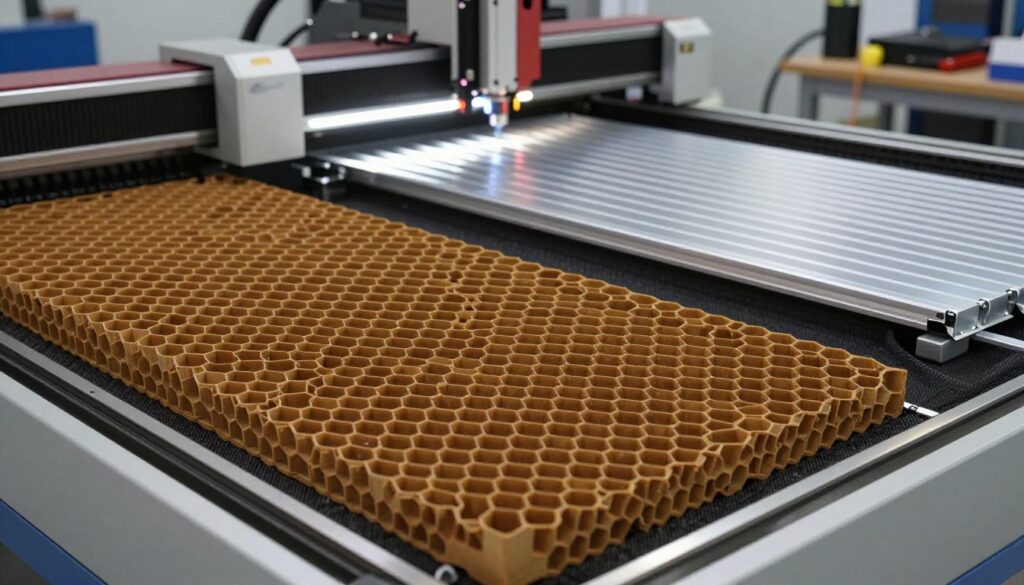
The honeycomb bed is my go-to choice for intricate work. These honeycomb bed advantages stem from the dense, grid-like structure that provides support across the entire surface area of the material.
Minimizing Flashback and Scorch Marks
Because the honeycomb cells are thin, they significantly reduce the surface area that can reflect the laser beam back onto the material. This design helps me avoid the unsightly burn marks that often appear on the underside of delicate projects.
Improving Exhaust Efficiency
The open structure of the honeycomb allows air to flow freely beneath the material. This efficient airflow pulls smoke and debris away from the cut path instantly. As a result, my edges remain clean and free of heavy soot buildup.
Benefits of Aluminum Slats for Heavy-Duty Cutting
When I shift my focus to larger, thicker materials, I prefer using aluminum slats for laser cutting. These slats offer a robust platform that handles the weight of dense substrates without sagging or warping.
Structural Stability for Thick Materials
Heavy materials like thick acrylic or wood require a rigid foundation to maintain focus. Aluminum slats provide the necessary structural stability to keep these heavy sheets perfectly flat during the entire cutting process.
Ease of Cleaning and Debris Removal
Cleaning is a breeze with a slat system. I can easily remove individual slats to scrape off resin or debris that accumulates over time. This maintenance routine ensures that my laser bed remains in top condition for long-term use.
| Feature | Honeycomb Bed | Aluminum Slats |
|---|---|---|
| Best For | Small, intricate parts | Large, heavy materials |
| Flashback | Minimal | Moderate |
| Cleaning | Requires specialized tools | Very easy |
| Airflow | Excellent | Good |
Step-by-Step Guide to Choosing the Right Bed for Your Project
I have found that making the best laser cutting bed choice depends entirely on the specific requirements of your project. A systematic approach ensures that your machine remains calibrated and your materials stay secure during the entire cutting process.
Assessing Material Thickness and Density
When I start a new job, I first evaluate the physical properties of my material. Thin, flexible sheets often require the high-density support of a honeycomb grid to prevent sagging or warping during the cut.
Conversely, heavy or rigid materials perform better on aluminum slats. These slats provide a sturdy foundation that minimizes contact points, which is essential for preventing unwanted heat buildup in dense substrates.
Configuring the Bed for Optimal Focal Length
The geometry of your bed surface directly impacts your focal length. I always measure the distance from the laser head to the material surface after placing it on the bed.
If you switch from a honeycomb grid to slats, you may need to adjust your Z-axis height. Failing to recalibrate can lead to a defocused beam, resulting in poor edge quality or incomplete cuts.
Adjusting Settings Based on Bed Material
Your best laser cutting bed choice should also dictate your power and speed settings. Honeycomb beds absorb more heat, which can sometimes affect the underside of your material.
I recommend running test cuts whenever you change your support surface. This simple habit helps you maintain consistent results across different project types.
Managing Air Assist with Honeycomb Grids
Honeycomb grids can sometimes trap smoke if the air assist is not properly directed. I ensure my air nozzle is positioned to push debris through the cells, keeping the cut path clear and clean.
Preventing Reflection Issues with Aluminum Rails
Aluminum rails are excellent for heavy-duty work, but they can cause back-reflection on delicate materials. I often use sacrificial masking or raise the material slightly to avoid these marks.
| Material Type | Recommended Bed | Key Benefit |
|---|---|---|
| Thin Paper/Fabric | Honeycomb | Prevents sagging |
| Thick Acrylic | Aluminum Slats | Reduces reflection |
| Heavy Wood | Aluminum Slats | Superior stability |
By following these steps, you can confidently make the best laser cutting bed choice for every unique task. Proper preparation is the secret to professional-grade results in your workshop.
Best Practices for Maintaining Your Laser Cutting Surface
I have found that consistent care is the secret to a long-lasting laser bed. Proper maintenance of your CO2 laser bed materials is essential for ensuring consistent cutting quality and safety during every project.
Cleaning Procedures for Honeycomb Cells
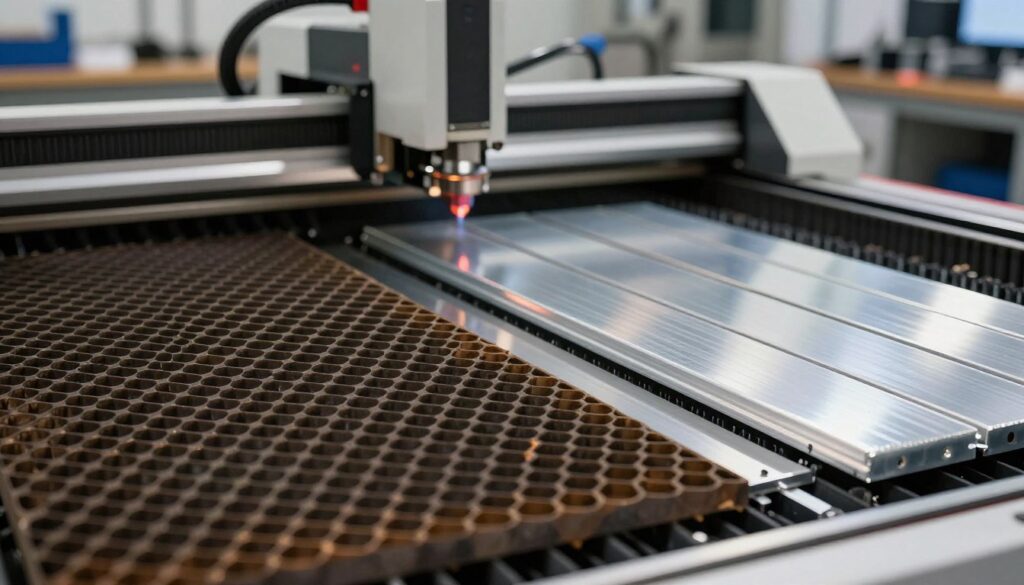
Honeycomb beds are notorious for collecting resin and debris over time. This buildup can obstruct airflow, which often leads to charring on the underside of your materials.
I recommend using a stiff brush or a vacuum attachment to clear out loose particles after every few sessions. For stubborn resin, a mild degreaser works wonders to keep the cells clear and prevent potential fire hazards.
“An ounce of prevention is worth a pound of cure when it comes to laser safety and machine longevity.”
Preventing Oxidation and Buildup on Aluminum Slats
Aluminum slats require a different approach to maintain a flat, reflective-free surface. Over time, these slats can develop oxidation or accumulate sticky residue from wood and acrylic projects.
I make it a habit to wipe down my slats with a non-abrasive cleaner to keep them smooth. Keeping these CO2 laser bed materials clean ensures that your work remains level and prevents unwanted back-reflections that can mar your finished pieces.
When to Replace Your Laser Bed Components
Even with the best care, parts will eventually wear out. You should monitor your bed for signs that it is time for a replacement to avoid compromising your machine’s performance.
- Warping or bending that prevents a flat cutting surface.
- Excessive pitting or deep burn marks that cannot be cleaned.
- Structural instability in the honeycomb frame.
Replacing worn CO2 laser bed materials is a smart investment in your craft. It guarantees that your laser remains a reliable tool for all your creative endeavors.
Conclusion
Choosing the right support surface transforms your laser cutting results. My experience shows that matching your bed type to your specific project needs creates a superior workflow. You gain better control over cut quality and material stability by making informed decisions.
I suggest testing both honeycomb beds and aluminum slats with your specific CO2 laser equipment. Brands like Thunder Laser or Boss Laser offer various accessories that fit these distinct styles. You will quickly see which surface provides the best airflow and back-reflection management for your unique tasks.
Consistent maintenance remains the secret to long-term success in any workshop. Keeping your workspace clean ensures that every project meets professional standards. I invite you to share your own experiences with these setups in the community forums.
Your journey toward mastering laser precision starts with these small adjustments. I look forward to seeing the intricate designs you create with your refined setup. Keep experimenting to unlock the full potential of your machine.