Selecting the right material is the most critical step for any laser enthusiast. If you choose the wrong substrate, your project may suffer from charring, uneven edges, or structural failure.
Through my years of experience in the workshop, I have tested countless materials. I eventually learned that the best sheets of Baltic birch plywood for laser cutting offer the perfect balance of structural integrity and aesthetic appeal.
This guide serves as a comprehensive roadmap for both beginners and professionals. My goal is to help you achieve professional-grade results in your home workshop every single time you fire up your machine.
Key Takeaways
- Material quality directly impacts the precision of your laser projects.
- Baltic birch is favored for its consistent density and minimal voids.
- Proper wood selection reduces the risk of fire and excessive charring.
- Understanding grain direction improves the final structural strength of your designs.
- This guide provides actionable advice for hobbyists and professional makers alike.
Understanding the Characteristics of Premium Baltic Birch
When I began my journey into laser cutting, I quickly realized that the quality of my material dictates the outcome of my work. Using premium Baltic birch plywood sheets is the most effective way to ensure clean, consistent results every time I fire up my machine.
Why Baltic Birch is the Industry Standard
The primary reason this material remains the gold standard is its unique multi-ply construction. Unlike standard hardware store plywood, these sheets are composed of thin, solid birch veneers that are cross-banded and bonded with high-strength adhesives.
This dense, uniform core eliminates the internal gaps and voids that often plague cheaper alternatives. Because the layers are consistent throughout the entire thickness, my laser beam cuts through the material without encountering unexpected pockets of air or glue, which prevents flare-ups and uneven charring.
Identifying True Baltic Birch vs. Imitations
It is vital to distinguish between authentic wood sourced from the Baltic region and domestic imitations. Genuine premium Baltic birch plywood sheets feature a light, uniform color and a smooth, sanded face veneer that accepts engraving beautifully.
I always inspect the edges of the board before purchasing. If I see large gaps or soft, porous wood in the inner plies, it is likely a domestic substitute that will cause significant frustration during the cutting process.
True Baltic birch is structurally superior because it maintains its shape under heat. By choosing authentic premium Baltic birch plywood sheets, I avoid the warping and bowing that often ruin intricate laser-cut designs.
Selecting the Best Sheets of Baltic Birch Plywood for Laser Cutting
When I start a new project, I prioritize selecting the best sheets of Baltic birch plywood for laser cutting to ensure a flawless finish. The material you choose serves as the foundation for your final product, influencing everything from edge charring to the clarity of your engravings.
Evaluating Face Veneer Quality and Grading
Understanding the grading system is essential for any maker. The B/BB grade is widely considered the gold standard, offering a clean, light-colored face with minimal patches or knots. This grade provides the consistent surface required for high-end aesthetic projects.
Alternatively, BB/CP grade is a more budget-friendly option. While it may contain more visible repairs or slight color variations, it remains a top quality laser cutting plywood for functional items where the finish is less critical. I always inspect the face veneer for tight grain patterns, as these yield the most uniform engraving results.
Assessing Core Consistency and Void Reduction
Internal structure is just as important as the outer appearance. Baltic birch is prized for its solid, multi-ply core, but not all manufacturers maintain the same standards. I look for sheets that are free of internal voids, as these gaps can trap heat and cause dangerous flare-ups during the cutting process.
Inconsistent cores often lead to uneven cutting depths, forcing you to run the laser multiple times. By choosing high-density, void-free plywood, you ensure that your laser beam passes through the material cleanly. This reliability saves time and prevents wasted material on failed cuts.
Choosing the Right Thickness for Your Laser Projects
Selecting the correct thickness depends heavily on the power output of your laser machine. For most hobbyist lasers, 1/8 inch (3mm) is the sweet spot for detailed, intricate designs. It cuts quickly and minimizes the risk of heavy charring on the edges.
If you are working on structural projects that require more rigidity, 1/4 inch (6mm) is an excellent choice. However, ensure your machine has the necessary wattage to penetrate the thicker core in a single pass. Using top quality laser cutting plywood at the right thickness allows you to maintain clean lines and professional results every time.
Sourcing High-Grade Plywood from Reliable Suppliers
My experience has shown that sourcing the right materials is the foundation of every successful laser project. When you invest in high-grade plywood for laser cutting, you significantly reduce the risk of failed cuts and charred edges. Finding a consistent vendor is often the biggest hurdle for makers, but it pays off in the long run.
Vetting Baltic Birch Plywood Manufacturers
When I evaluate a potential Baltic birch plywood supplier, I look for transparency regarding their production process. A reputable manufacturer should provide clear details about the core composition and the adhesive used between layers. I always prioritize vendors who guarantee a void-free core, as internal gaps can cause uneven laser penetration and fire hazards.
It is also helpful to request a small sample pack before committing to a bulk order. This allows you to test the material’s reaction to your specific laser settings. Consistent quality is the hallmark of a professional-grade supplier.
Navigating Online Marketplaces for Custom Laser Cutting Plywood
The digital landscape offers many options for purchasing custom laser cutting plywood, but not all vendors are created equal. I recommend searching for shops that specialize in pre-cut sheets specifically sized for laser beds. These vendors often understand the importance of flat, warp-free boards that are ready for immediate use.
When browsing online, pay close attention to customer reviews that mention shipping protection. Plywood is prone to damage during transit, so look for sellers who use reinforced packaging. Reliable shipping ensures your material arrives in pristine condition.
| Supplier Type | Best For | Key Advantage |
|---|---|---|
| Specialty Laser Shops | Small Projects | Pre-cut, flat sheets |
| Industrial Lumber Yards | Bulk Orders | Lower cost per sheet |
| Online Marketplaces | Convenience | Wide variety of sizes |
Verifying Sustainability and Certification Standards
Choosing a responsible Baltic birch plywood manufacturer is just as important as the quality of the wood itself. I always check for certifications like the Forest Stewardship Council (FSC) to ensure the timber is harvested ethically. These standards confirm that the wood comes from forests managed with environmental and social responsibility in mind.
“Sustainable sourcing is not just an ethical choice; it is a commitment to the longevity of our craft and the health of our planet.”
By verifying these certifications, you can feel confident that your creative work supports sustainable forestry practices. Always ask your supplier for documentation if it is not clearly listed on their website. Taking this extra step ensures your workshop remains aligned with high ethical standards.
Preparing Your Plywood Sheets for Optimal Laser Performance
Achieving professional results with Baltic birch plywood begins long before you turn on your laser cutter. Because wood is a natural, porous material, it constantly interacts with the air in your workspace. Taking the time to prepare your sheets properly ensures that your final projects are accurate, clean, and free from common defects.
Acclimatizing Wood to Your Workshop Environment
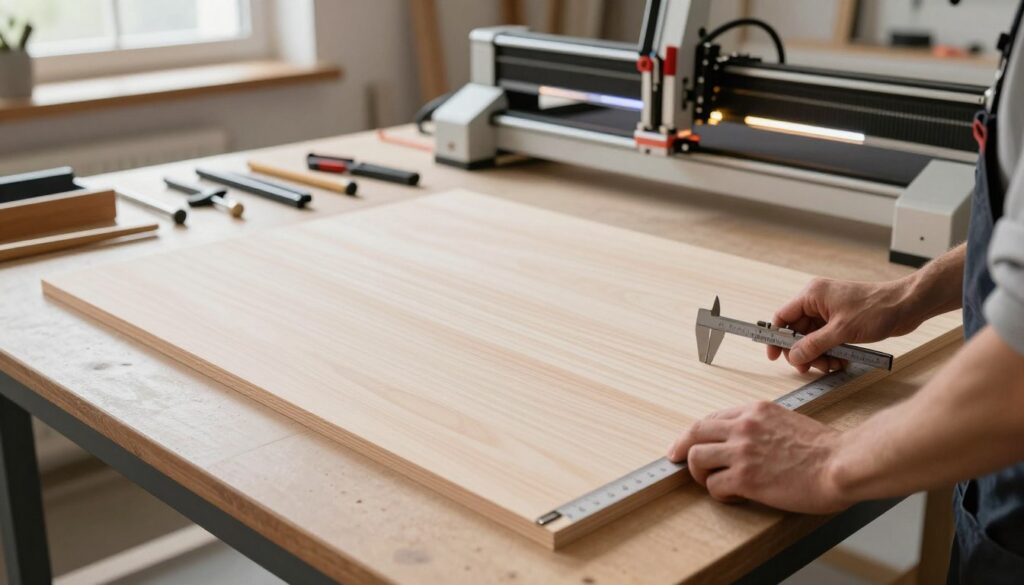
When you bring new plywood into your shop, it often carries moisture levels from the warehouse or shipping container. I recommend letting your sheets sit flat in your workshop for at least 48 hours before you begin any laser cutting tasks. This period allows the wood to reach equilibrium with the ambient humidity of your specific environment.
If you skip this step, the wood may expand or contract unexpectedly during the cutting process. This movement can ruin your alignment and lead to inconsistent kerf widths. Always store your sheets horizontally on a flat surface to prevent them from bowing while they adjust.
Surface Preparation and Sanding Techniques
Many manufacturers apply thin layers of resin or protective coatings to plywood during production. These substances can interfere with the laser beam, causing uneven charring or incomplete cuts. I find that a light, manual sanding with 220-grit sandpaper is the best way to ensure a clean surface.
By removing these factory-applied residues, you allow the laser to interact directly with the wood fibers. This surface preparation results in a much smoother finish and reduces the amount of post-processing work you need to perform later. Always wipe away any dust with a tack cloth before placing the sheet into your machine.
Managing Moisture Content to Prevent Warping
High moisture content is the primary enemy of thin plywood sheets. When a laser heats the wood, trapped moisture can turn into steam, causing the veneer to bubble or the entire sheet to warp. You can mitigate these risks by keeping your workspace climate-controlled and using a moisture meter to check your stock.
If you notice your sheets are bowing, you might need to use a honeycomb pin or a magnetic hold-down system to keep the material flat. The following table outlines how different environmental factors influence your material stability.
| Environmental Factor | Impact on Plywood | Recommended Action |
|---|---|---|
| High Humidity | Expansion and warping | Use a dehumidifier |
| Low Humidity | Brittle fibers and bowing | Store in a sealed bag |
| Temperature Fluctuations | Internal stress | Maintain stable climate |
| Direct Sunlight | Uneven drying | Store in a dark area |
Optimizing Laser Settings for Baltic Birch
I have found that fine-tuning your laser settings is essential for working with Baltic birch plywood. Achieving a clean, professional edge requires a delicate balance between machine capabilities and the unique density of the wood. By taking the time to calibrate your equipment, you ensure that every cut is crisp and free of unwanted debris.
Determining Power and Speed for Clean Cuts
Finding the“sweet spot”for your laser involves a careful trade-off between power and speed. If your power is too high, you will likely see excessive charring along the edges of your cut. Conversely, if your speed is too fast, the laser may fail to penetrate the dense core of the plywood.
I recommend running a series of test cuts on a scrap piece of the same material before starting your main project. Start with a conservative power setting and gradually increase it until you achieve a clean through-cut.Consistency is keywhen you are trying to maintain a uniform look across multiple pieces.
Adjusting Focus for Different Plywood Thicknesses
The focal length of your laser beam is a critical factor when cutting through various thicknesses of Baltic birch. A properly focused beam ensures that the energy is concentrated on the smallest possible point. This concentration allows for a narrower kerf and a much cleaner finish on the wood surface.
When working with thicker sheets, you may need to adjust your focus slightly below the surface of the material. This technique helps the laser maintain its cutting power as it travels through the inner layers of the plywood. Always verify your focus height whenever you switch between different material thicknesses to avoid poor cut quality.
Managing Air Assist and Exhaust for Minimal Charring
Air assist is an indispensable tool for preventing flare-ups and reducing charring during the cutting process. By blowing a steady stream of air directly into the cut path, you clear away smoke and debris that would otherwise settle on the wood. This simple addition significantly improves the aesthetic quality of your finished edges.
Proper exhaust ventilation is equally important for maintaining a clean workspace and protecting your material. A strong exhaust system pulls smoke away from the laser head, preventing it from staining the surface of the plywood.Effective airflow managementis the difference between a scorched project and a professional-grade result.
Advanced Techniques for Baltic Birch Laser Engraving
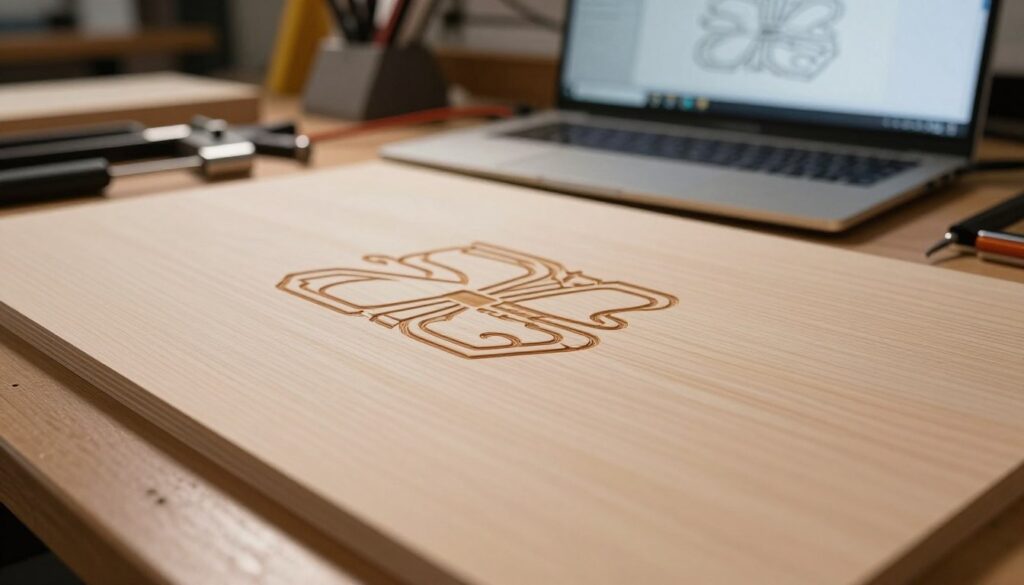
I have found that the secret to stunning laser projects lies in the nuances of the engraving process. While cutting focuses on power and depth, engraving requires a delicate balance of speed and resolution to achieve professional results. When working with Baltic birch plywood for laser engraving, your primary goal is to create a clean, high-contrast mark without burning the surrounding fibers.
Achieving High-Contrast Engraving Results
To get the best contrast, I recommend using a lower power setting combined with a higher speed. This prevents the laser from charring the wood too deeply, which often results in a muddy or indistinct image. Experimenting with your DPI (dots per inch) settings is also crucial for capturing fine details in your designs.
I often suggest running a small test grid on a scrap piece of wood before starting your final project. This allows you to identify the exact power and speed combination that produces the crispest, darkest mark on your specific sheet of Baltic birch plywood for laser engraving.
Masking Strategies to Protect Wood Surfaces
One of the most effective ways to maintain a clean surface is by using high-quality paper masking tape. By applying a layer of masking over the entire surface before you begin, you effectively shield the wood from smoke stains and resin buildup. This simple step saves hours of cleanup time after the laser finishes its work.
When you remove the tape after engraving, the wood underneath remains pristine and free of unsightly burn marks. I prefer using a medium-tack transfer tape, as it is easy to apply and leaves no sticky residue behind. This technique is essential for achieving a clean, polished look on every piece you create.
Post-Processing and Finishing Your Laser-Cut Pieces
Once the engraving is complete, a little post-processing goes a long way in elevating your work. I start by performing a light sanding with high-grit sandpaper to remove any lingering soot or raised fibers. This step ensures the surface feels smooth to the touch and prepares it for a final finish.
Applying a clear coat, such as a light polyurethane or a natural wax, helps to seal the wood and protect your design from moisture. Using Baltic birch plywood for laser engraving provides a beautiful, light-colored canvas that truly pops once a finish is applied. Taking these extra steps will transform your raw laser-cut pieces into high-quality, professional-grade products.
Troubleshooting Common Issues During the Cutting Process
Laser cutting Baltic birch is generally reliable, but I have learned that troubleshooting is a vital skill for any maker. Even when you source the highest quality materials, you may occasionally face technical hurdles that disrupt your workflow. Understanding how to identify and resolve these problems ensures that you can salvage your projects and maintain a safe workshop environment.
Addressing Inconsistent Cutting Through the Core
Sometimes, your laser may fail to penetrate the wood completely, leaving behind uncut sections. This often happens because of hidden glue pockets or internal voids within the plywood core. When the laser beam hits a dense glue deposit, it loses energy, resulting in an incomplete cut.
To fix this, I recommend performing a test cut on a scrap piece from the same sheet. If the issue persists, you might need to slightly increase your power settings or decrease the speed. Always inspect the back of your material to ensure the beam is cutting through the final veneer layer consistently.
Mitigating Flare-ups and Fire Hazards
Flare-ups are a common concern when working with wood, especially when the laser encounters resinous spots. These sudden bursts of flame can char your material and pose a significant safety risk. I always keep a fire extinguisher nearby and ensure my air assist is functioning at full capacity to blow away debris.
Regularly cleaning your honeycomb bed is another essential step to prevent fire hazards. Accumulated dust and small wood scraps can easily ignite during a long cutting job. By keeping the workspace clean, you minimize the risk of flare-ups and improve the overall quality of your edges.
Correcting Warpage and Bowing in Thin Sheets
Thin plywood sheets are prone to warping due to changes in humidity or improper storage. If you find your material is bowed, do not discard it immediately. You can often flatten the wood by placing it on a flat surface and applying weight for several hours.
Another effective method involves using a honeycomb pin system to hold the sheet firmly in place during the cutting process. This keeps the surface level and ensures the laser remains in focus across the entire design. Proper storage, such as keeping sheets flat and away from direct heat, is the best way to prevent these issues from occurring in the first place.
| Issue | Primary Cause | Recommended Solution |
|---|---|---|
| Incomplete Cuts | Internal Voids/Glue | Increase power or slow speed |
| Excessive Charring | Low Air Assist | Clean lens and check pump |
| Warped Material | Humidity/Storage | Use hold-down pins or weights |
| Flare-ups | Resin/Dirty Bed | Clean honeycomb and adjust air |
Conclusion
Selecting premium Baltic birch plywood transforms the way you approach laser cutting. High-quality materials provide the foundation for every successful project you create in your workshop.
I encourage you to test various power and speed settings on your specific laser machine. Small adjustments often lead to significant improvements in edge quality and engraving detail.
Consistent results come from a deep understanding of your wood and your equipment. Keep a log of your successful settings to streamline your future production runs.
Your journey toward professional-grade laser projects relies on patience and precision. Apply these techniques to your next design to see the difference in your finished work. I look forward to seeing the intricate pieces you produce with these reliable methods.